dots
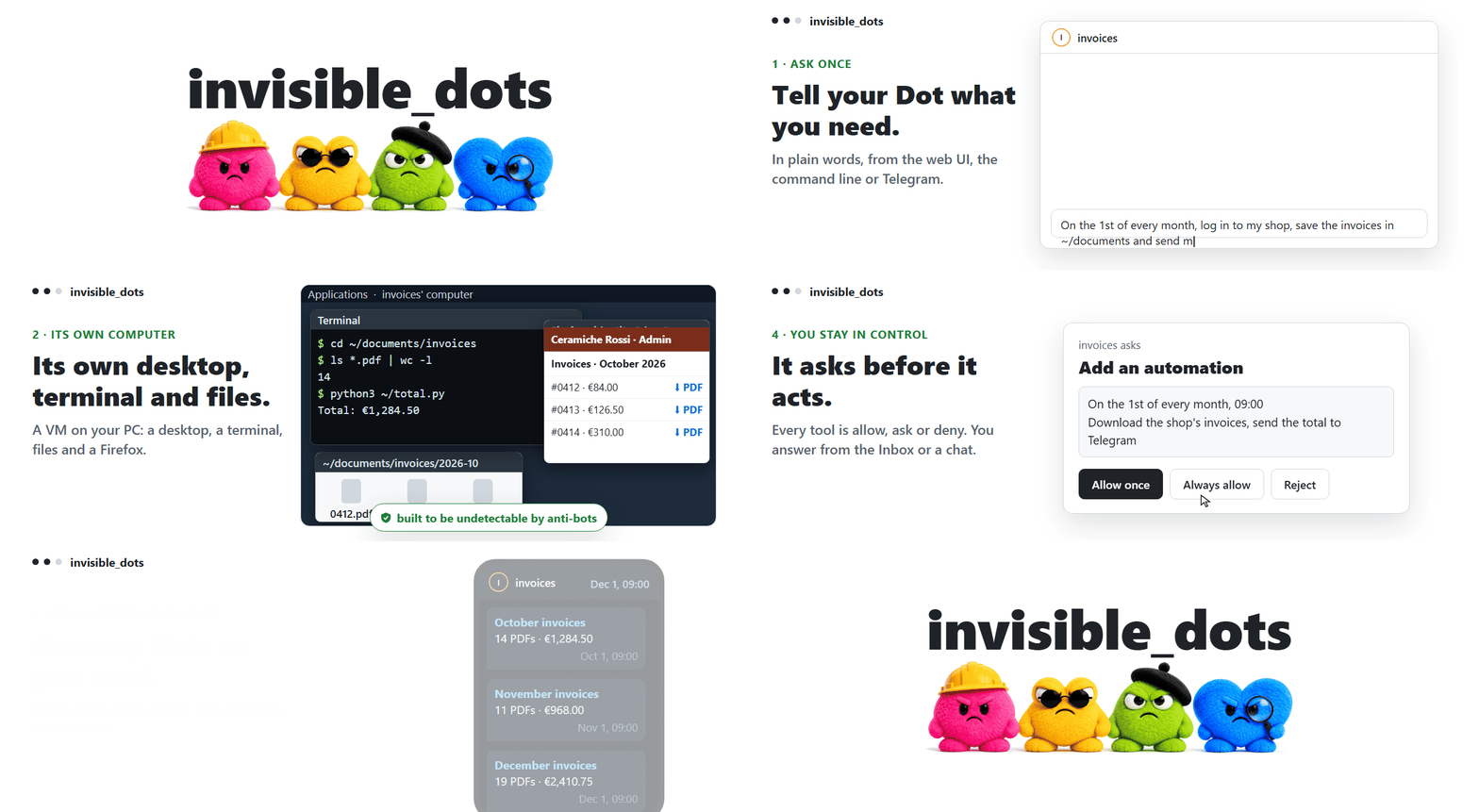
Open-source, self-hosted alternative to OpenAI Dots, Grok Bot. Built to be undetectable by anti-bot systems.
You need Node 24+, Go 1.25+, Git and hardware virtualization (x86-64), plus an OpenRouter key.
Windows (PowerShell):
winget install -e --id OpenJS.NodeJS.LTS; winget install -e --id GoLang.Go; winget install -e --id Git.Git
git clone https://github.com/feder-cr/invisible_dots; cd invisible_dots
npm ci; npm run build --workspace @invisible-dots/cli
node apps/cli/dist/invisible-dots.mjs setup --all
node apps/cli/dist/invisible-dots.mjs server
Linux (Ubuntu 24.04):
curl -fsSL https://deb.nodesource.com/setup_24.x | sudo -E bash - && sudo apt-get install -y nodejs git && sudo snap install go --classic
git clone https://github.com/feder-cr/invisible_dots && cd invisible_dots
npm ci && npm run build --workspace @invisible-dots/cli
node apps/cli/dist/invisible-dots.mjs setup --all
node apps/cli/dist/invisible-dots.mjs server
setup --all installs QEMU and turns on the accelerator (KVM, or the Windows Hypervisor Platform), then builds or
downloads the Dot's images; run it again after a restart and it carries on. Then open http://127.0.0.2:3000,
paste your OpenRouter key and create your first Dot. Every step and its failure modes:
the guide's quickstart.
What to ask a Dot
Anything that needs a computer and a person's judgement, for as long as it takes:
Open a browser identity called research, go to https://example.com and tell me the page's title and its first sentence. Leave the browser open.
Every morning, check one-way fares from Milan to Lisbon for the next two weeks, write them to ~/workspace/fares.csv and tell me the cheapest day.
Log in to the shop with the shopping identity, download this month's invoices to ~/documents, and remember where the invoices page is for next time.
What a Dot has
| A computer of its own | A hardware-accelerated VM with a Linux desktop and a persistent disk. It sleeps when idle and wakes for the next message, task or automation. |
| A browser that is not blocked | invisible_playwright_mcp: Firefox patched in C++, the fingerprint set inside the engine. Each identity keeps its own cookies and logins. |
| Memory and skills | It writes its own notes and how-tos in its home folder, as Claude Code does, and reads them on the next task. |
| Your MCP servers | Any MCP server you declare, a program on its computer or a URL, as in Claude Code. Its keys stay out of the config. |
| Permissions you set | Every tool belongs to a permission: allow, ask or deny. An ask waits in your Inbox, survives a restart and runs the call once. |
| Tasks and automations | A queue with priorities and start times, and its own recurring jobs, for which its computer is started on time. |
| Many ways to reach it | Web UI, command line, HTTP API with live events, Telegram, and WhatsApp as an opt-in. |
| Nothing lost on a crash | A restart or a kill -9 keeps every message and task you saw accepted, and a tool call cut short is never run twice. |
Documentation
- Guide: install, the web UI, the command line, the browser, channels, configuration, updating
- Architecture: every component and why it is there
- Troubleshooting and development and tests
Related projects
The pieces of this one. A Dot's browser is invisible_playwright_mcp, on invisible_playwright and invisible_core; the engine is a fork of nanobot.
License
MIT, see LICENSE. Third-party components and their licenses: THIRD_PARTY_NOTICES.md.
Disclaimer
This project is provided as-is, with no warranties. Use it at your own risk and in compliance with the laws of your jurisdiction. A Dot acts with your accounts and from your connection: respect the terms of the sites it visits and their robots.txt.



Built by Federico Elia